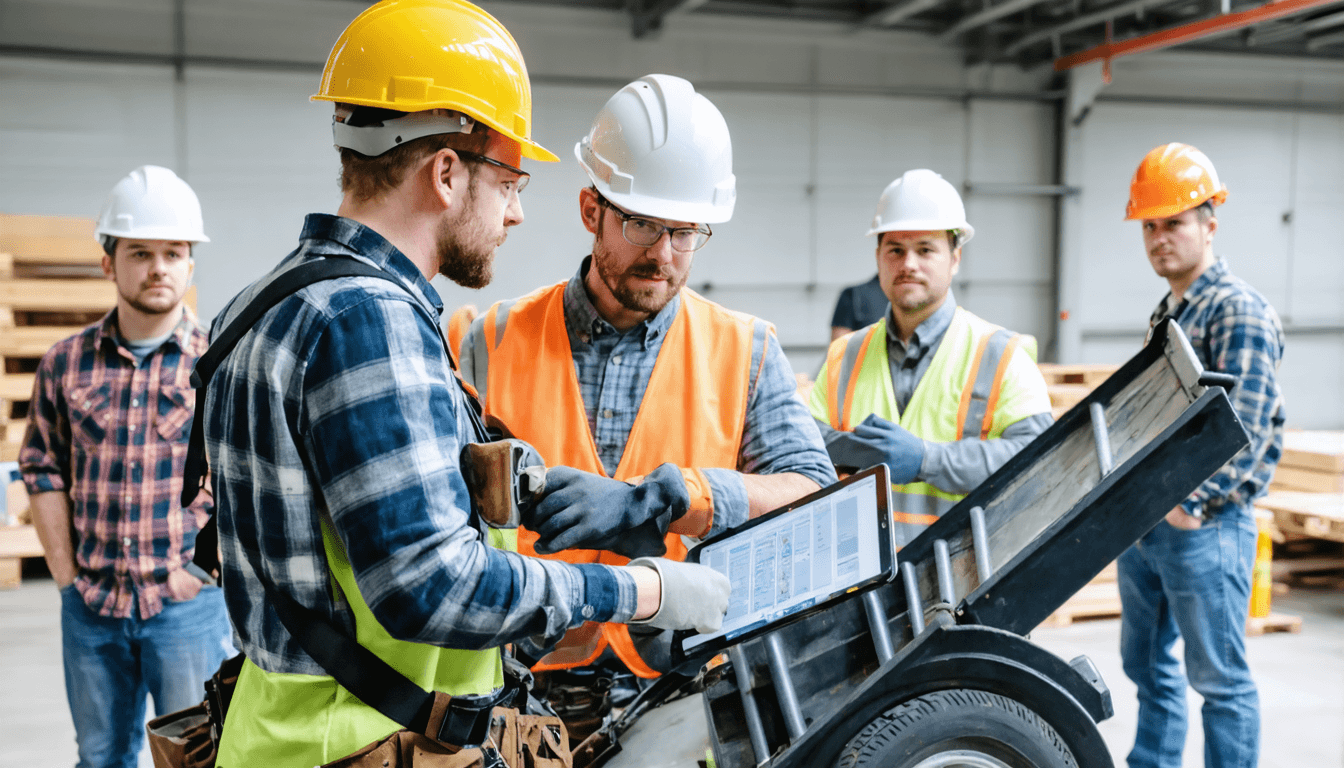
Do Back Support Belts Help Construction Workers?
What the Research Really Says
TateHenry
Creator

Construction work is tough on the back. Lifting materials, carrying heavy loads, bending, twisting, unloading trucks, climbing ladders, and working in awkward positions can all place pressure.
Construction work is tough on the back. Lifting materials, carrying heavy loads, bending, twisting, unloading trucks, climbing ladders, and working in awkward positions can all place pressure on the lower back.
Over time, that strain can lead to soreness, fatigue, reduced focus, and missed work. That is why many construction workers ask a practical question:
Do back support belts actually help?
The honest answer is: sometimes, but not in the way many people think.
A back support belt may help some workers feel more stable and supported during lifting or bending tasks. However, research has not proven that back belts prevent workplace back injuries. NIOSH states that there is inadequate scientific evidence to suggest that back belts reduce injury risk, and OSHA’s preferred approach is to eliminate hazardous conditions through engineering controls rather than relying on belts alone.
Quick Answer
Back support belts may improve comfort, posture awareness, and perceived stability during lifting or repetitive manual tasks. However, they should not be treated as a guaranteed way to prevent back injuries.
The best way to reduce back strain is to improve how the work is planned. That means using safer lifting practices, mechanical assistance, better material placement, team lifts, task rotation, and enough recovery time during physically demanding work.
Why Back Pain Is So Common in Construction
Construction workers rarely lift in perfect conditions.
A worker may need to lift from the ground, carry materials across uneven surfaces, twist around equipment, reach into a truck bed, or work in a tight space with limited room to move. Even when the load is not extremely heavy, repeated bending, twisting, and carrying can add up over time.
Many back problems are not caused by one dramatic accident. They often build slowly through repeated strain. A worker may feel fine at the start of a project but gradually notice stiffness, fatigue, or soreness after weeks of repetitive lifting and awkward movement.
This is why back protection should not only focus on what a worker wears. It should also focus on how the task is designed.
How Back Support Belts Work
Back support belts wrap around the lower back and abdomen. Depending on the design, they may create a feeling of support around the torso and remind workers to pay attention to posture and lifting position.
For some workers, that can be useful. A belt may help them feel more aware of their movements during lifting, bending, or material handling. It may also provide a sense of stability during short periods of repetitive work.
But feeling supported is not the same as being fully protected.
A back support belt does not remove the weight of a load. It does not fix poor lifting conditions. It does not make awkward twisting safer. It also does not replace proper planning, mechanical lifting equipment, or help from another worker when a load is too heavy or difficult to move alone.
That is why a back support belt should be viewed as a comfort and support tool, not a complete injury-prevention solution.
What the Research Says
Research on workplace back belts has been mixed, but major safety organizations remain cautious.
NIOSH reviewed the evidence and concluded that there is inadequate scientific evidence to recommend back belts as an effective way to prevent occupational back injuries. NIOSH also advises employers to focus on redesigning work tasks and reducing lifting hazards rather than relying on belts.
OSHA takes a similar position. In its interpretation on back belts, OSHA states that its preferred approach to preventing back injuries is to eliminate hazardous workplace conditions, primarily through engineering controls. These can include mechanical assists, adjusting lifting heights, and designing tasks to reduce unnecessary bending or twisting.
A large NIOSH study also found no evidence that back belts reduced back injury or back pain among retail workers who lifted or moved merchandise. While construction work is different from retail work, the finding supports the same overall point: back belts should not be treated as a proven injury-prevention method on their own.
Where Back Support Belts May Help
A back support belt may still be useful for some workers. The benefit is usually comfort, awareness, and perceived support rather than guaranteed injury prevention.
For example, a worker doing short periods of repeated lifting may feel more stable while wearing a belt. Someone loading materials or bending frequently may find that a belt reminds them to move more carefully. Another worker may simply feel less fatigued during certain tasks.
These benefits matter, especially in physically demanding jobs. Comfort can affect focus, energy, and confidence throughout the day. But the belt should support safer habits, not replace them.
The important question is not only, “Should I wear a back belt?” A better question is, “Why is this task putting so much strain on my back in the first place?”
The Risk of Relying Too Much on a Belt
One of the biggest concerns with back support belts is false confidence.
If a worker feels protected, they may be tempted to lift more weight, skip a team lift, avoid using a cart or hoist, rush the task, or keep working through discomfort. That can increase risk instead of reducing it.
A back support belt should never be used as a reason to push harder, ignore pain, or take shortcuts. It should be part of a safer work approach, not an excuse to make unsafe work feel acceptable.
What Protects the Back Better Than a Belt?
The strongest back protection usually comes from reducing the strain before it reaches the worker’s body.
If materials are delivered far from the work area, workers may spend the entire day carrying loads across the site. In that case, better delivery placement will usually reduce strain more effectively than a belt.
If workers are repeatedly lifting materials from ground level, raising those materials closer to waist height can reduce stress on the lower back.
If one person is carrying a load that is too heavy, awkward, or unstable, a team lift or mechanical aid is often the safer choice.
And if the same worker is doing repetitive lifting for hours, rotating tasks and adding short recovery breaks can help reduce fatigue.
In other words, the best solution is often not more support around the body. It is better planning around the work.
What to Look for in a Construction Back Support Belt
If a worker chooses to use a back support belt, comfort and fit matter.
The belt should sit securely around the lower back and abdomen without sliding, bunching, or digging into the body. It should be breathable enough for long shifts and flexible enough to allow safe movement.
Construction workers still need to bend, kneel, climb, reach, and move around equipment. If the belt is too restrictive, it may cause awkward movement in other areas of the body.
Durability is also important. A belt used on a construction site may be exposed to sweat, dust, abrasion, and constant movement. Strong stitching, reliable fasteners, and materials that can be cleaned easily are practical advantages.
The belt should also be checked with other safety equipment. It must not interfere with tool belts, high-visibility clothing, fall protection, harnesses, or other required PPE.
When Workers Should Stop and Speak Up
Back pain should not be ignored.
A worker should report pain early if it is sharp, getting worse, traveling down the leg, causing numbness or tingling, or not improving with rest. Weakness, pain after a specific lifting incident, or pain that affects normal movement should also be taken seriously.
A back support belt should not be used to push through serious pain. If a task is causing pain, the task may need to change.
The Bottom Line
Back support belts may help some construction workers feel more comfortable, stable, and supported during lifting, bending, or material-handling tasks.
But they are not proven to prevent workplace back injuries by themselves.
The best approach is to treat a back support belt as one possible support tool within a larger injury-prevention plan. Safer lifting, better material placement, mechanical assistance, team lifts, task rotation, worker training, and smart job-site planning matter more than any single piece of gear.
The best back support is not just something workers wear.
It is how the work is planned.
Frequently Asked Questions
Do back support belts prevent back injuries?
Back support belts have not been proven to prevent workplace back injuries. They may help some workers feel more supported, but they should not replace safer lifting practices, mechanical assistance, task planning, or training.
Should construction workers wear back support belts?
Some construction workers may choose to wear a back support belt for comfort during lifting or bending tasks. However, the belt should not interfere with movement or other PPE, and it should never encourage workers to lift heavier loads.
What is better than a back support belt?
The best protection usually comes from reducing the strain itself. This can include using carts, lifts, hoists, team lifts, better material placement, raised work surfaces, shorter carrying distances, and task rotation. OSHA also emphasizes eliminating hazardous conditions through engineering controls where possible.