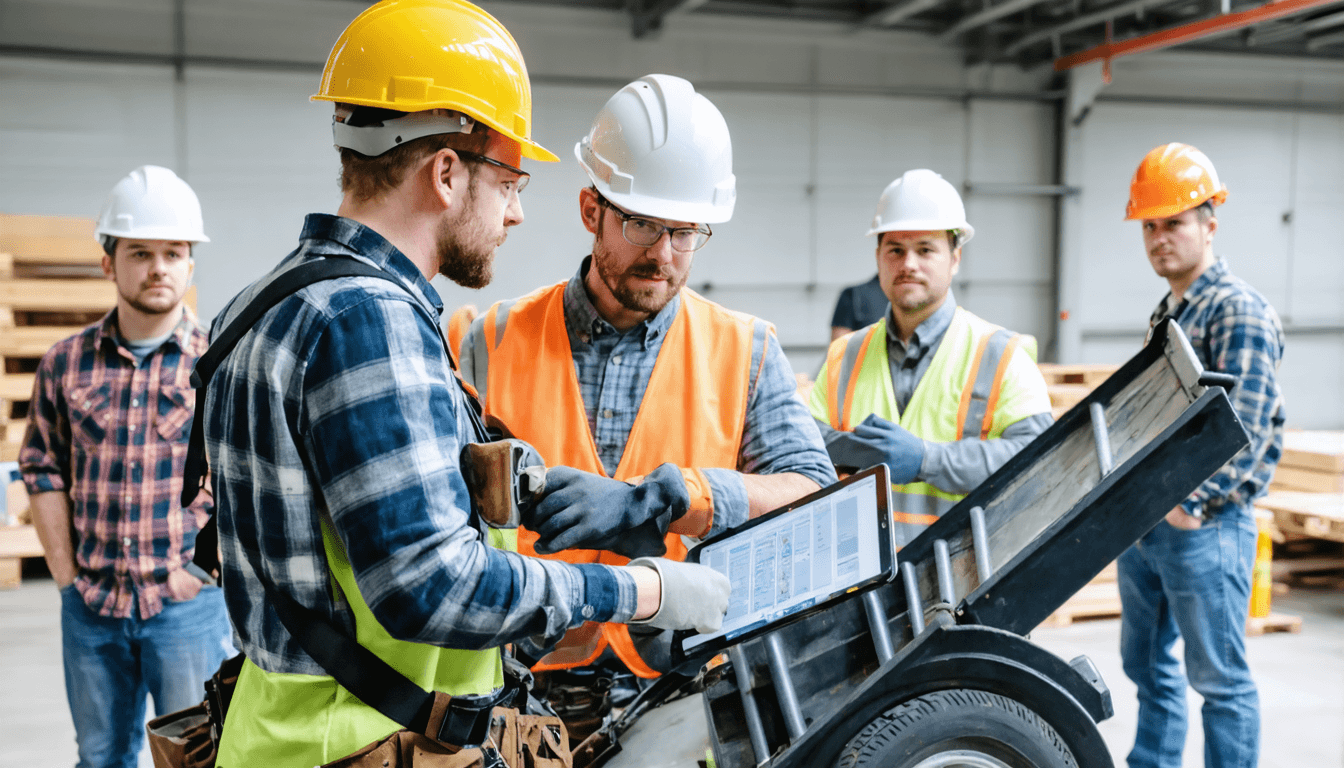
The New Face of Construction Work in 2025:
Skills, Tech, and the Rise of the Digital Tradie
kate
Creator

How the construction industry is evolving in 2025. From AI and BIM to smart tools and digital workflows. The rise of the digital tradie, a new kind of worker blending hands-on skill with tech fluency
The construction industry, often seen as one rooted in manual labor, dusty sites, and physical skills passed down generation to generation, is transforming. By 2025, a new paradigm is emerging: one in which traditional craftsmanship merges with digital fluency, data-driven workflows, and high-tech tools. The result: a new breed of worker often dubbed the “digital tradie” equipped not only with trowel and hammer, but also with tablets, sensors, AI-backed inspection tools, and data dashboards.
This evolution comes in response to several pressures: labor shortages, rising costs, complexity of modern projects, demand for quality, tighter deadlines, and the need for safer, more efficient sites. At the same time, technology is finally catching up to the industry’s needs, and adoption is accelerating. Let’s have a look at:
- How 2025’s construction projects differ from those of a decade ago
- What new skills “digital tradies” need
- Which technologies are driving change, and how they change the job
- What this means for workers, companies, and the future of construction
Why 2025 Is a Turning Point
Recent industry research underscores the speed and scale of digital adoption across construction. According to the 2025 “State of Digital Adoption in the Construction Industry” report (commissioned by Autodesk and Deloitte Access Economics), firms in the Asia-Pacific region, which includes Australia, have raised the average number of technologies in use from 5.3 to 6.2 per company in just one year.
More broadly, nearly two-thirds of organizations in the building and construction sector reported investing in data and digitalization over the past 12 months. Some dedicated up to 5 -10% of revenue to digital infrastructure or innovation.
These investments are not theoretical: firms report real gains. Construction companies integrating digital tools say they see improved project coordination, fewer safety incidents, better schedule adherence, and elevated quality of work.
Why now? Several intersecting pressures make digital transformation not just attractive but essential: -** Labor shortages and skill gaps** in many markets, it’s harder to recruit traditional tradespeople. Digital tools can help amplify fewer workers.
- Project complexity in modern buildings, infrastructure, and smart-enabled developments requires more coordination, precision, and documentation than before.
- Cost pressures and tight deadlines, inflation, material supply challenges, and tighter financing push firms to streamline and de-risk projects.
- Demand for higher safety standards, both for worker safety and regulatory compliance, digital workflows, and sensors, helps manage risk and accountability.
Who Is the “Digital Tradie”? New Skills Meet Old Building Blocks
The “digital tradie” is not a replacement for traditional craftsmen, but rather a hybrid: someone who combines hands-on building skills with digital literacy, adaptability, and a willingness to work with new tools. Below are the key traits and skills that define this new role:
Technical and Digital Literacy
- Comfort using tablets, smartphones, or rugged laptops on site for plans, schedules, checklists, and updates.
- Familiarity with digital construction tools: Building Information Modeling (BIM), cloud-based project apps, safety and inspection apps, mobile reporting, digital timesheets, or material tracking.
- Understanding of data workflows: logging progress, capturing photos, updating status, and promptly flagging issues.
Adaptability and Tech-Tool Fluency
- The ability to use AI-assisted tools for planning, quality control, scheduling forecasts, or defect detection, many firms are now embedding AI into workflows.
- Willingness to work alongside automation, drones, or sensor-based inspections, for tasks such as site surveying, safety checks, or quality audits.
Site Experience and Traditional Craft Skills
- Strong foundation in core construction trades, bricklaying, concrete work, electrical, plumbing, finishing, etc. Because while technology augments tasks, many remain hands-on and skill-intensive.
- Awareness of safety protocols, structural standards, and on-the-ground constraints. Digital tools don’t replace craftsmanship; they support it.
Soft Skills: Communication & Data-Driven Mindset
- Clear communication: reporting, documenting, collaborating with remote teams, managers, subcontractors, and sometimes remote offices.
- Attention to detail and commitment to data-driven workflows, accurate reporting, defect logging, and schedule updates.
- Openness to continuous learning: digital tools evolve fast; the “digital tradie” needs to adapt to new workflows, apps, or standards.
In short, this is no longer the traditional “hammer-and-nails” worker only. The role demands hybrid competence, blending old-school building skills with modern digital workflows.
What Technologies Are Driving the Change in 2025
Let’s take a quick look at what technologies are changing in 2025. Here are the major tech waves reshaping construction sites in 2025:
AI and Machine Learning. Planning, Risk, Quality and Decision Support
AI adoption is accelerating: 37% of firms in the APAC region now say they use AI or ML tools in their operations (up from 26% in 2023). Use cases include:
- Predictive modeling of project timelines and resource needs
- Risk detection (e.g., potential structural or safety issues before they arise)
- AI-powered quality control, defect detection, and compliance checks
- Real-time decision support during construction phases, helping site managers respond quickly to changing conditions. A recent 2025 study on “industrial AI in construction” shows promise for improving schedule, quality, and safety outcomes.
BIM 2.0 & Digital Twins. From Design to Operations
What once was just a design tool (BIM) is evolving into a continuous-data platform used from design, through construction, to facility management. This means more reliable handoffs, less rework, better coordination between architects, engineers, site crews, and after-construction maintenance teams. Errors due to miscommunication or outdated plans are being reduced, improving overall project delivery and quality.
Drones, IoT, and Smart Sensors. Real-Time Site Data & Safety
Drone surveying, reality capture, and IoT sensors for site monitoring are becoming commonplace. These tools speed up inspections, monitor structural changes, track progress, and even support maintenance planning. In addition, connected wearables, smart helmets, and sensor-equipped equipment are helping monitor worker safety and site conditions, a boost for both safety compliance and real-time reporting.
Robotics and Automation. Handling Repetitive or High-Risk Tasks
Tasks like bricklaying, concrete pouring, welding, or heavy lifting are increasingly supported by robotics, especially on large or industrial-scale projects.
Robots don’t replace trained craftspeople entirely, but they complement human labor, alleviating repetitive strain, improving speed, and reducing risk. This allows skilled workers to focus on nuanced tasks requiring judgment, precision, or craftsmanship.
Digital Project Management and Data Tools. Collaboration and Workflow Efficiency
Cloud-based collaboration platforms, digital quality assurance tools, mobile job reporting, and integrated scheduling software are replacing spreadsheets and paper-based processes. Firms with advanced tech stacks report fewer delays and a stronger ability to hit budgets and deadlines.
What Early Adopters Are Already Seeing Benefits of Going Digital
Construction firms and workers embracing the digital-tradie model are reporting tangible gains:
- Faster project completion, fewer delays, improved scheduling, better coordination, fewer mistakes. Improved safety and reduced incidents, sensor data, real-time monitoring, and better oversight.
- Higher quality outcomes and fewer defects/ rework cycles, thanks to BIM accuracy, AI quality checks, and drone/reality-capture inspections.
- Better resource utilization and cost control, predictive maintenance, telematics, and efficient scheduling reduce waste, idle time, and heavy overhead.
- Attracting new talent despite labor shortages, for younger or tech-savvy workers, the construction site becomes more appealing when it doesn’t mean outdated, purely manual labor, but a hybrid high-tech, skilled environment.
Companies and workers who adapt to new realities and use new tools and methods are more resilient, competitive, and future-proof.
But Challenges Remain. The Reality Check for 2025
Despite the momentum, the transition isn’t frictionless. Many firms and workers face hurdles:
Integration and Fragmentation of Systems
According to the Autodesk/Deloitte 2025 report, many construction businesses use numerous “data environments,” often 10 to 12 separate systems, to manage projects, design data, scheduling, procurement, and operations. That fragmentation leads to duplication, inefficiencies, and higher training/operational costs. Some firms reported that switching to a unified data environment could save them ~10.5 hours per week on average.
Training and Skills Gap. Not All Tradies Are Digital-Ready
Adoption of new tools requires workers to learn new workflows, from using BIM and tablet apps to operating drones or AI-powered inspection tools. Not every experienced tradesperson feels comfortable with that shift, especially older workers rooted in traditional methods.
Upfront Costs and Return on Investment Uncertainty
Although long-term gains are strong, initial investments in technology, training, and process change can be significant. For smaller firms or subcontractors with tight margins, it can be risky. Some companies remain hesitant to invest, or do so partially, which undercuts potential benefits.
Cultural Resistance and Change Management
The construction industry is historically conservative. Tools and processes that make sense in theory often fall flat in practice if site teams find them cumbersome or unrealistic. If tech adoption complicates workflows, it may be dropped.
What the Future Holds: The New Normal for Construction Work
Given these changes and tensions, here’s how the future of construction work is shaping up and what “work” might look like for a craftsman in 2027–2030.
Hybrid, Tech-Enabled Workforce
Expect more site crews to be “hybrids”, part traditional trade, part data operator. A plasterer might carry a smartphone with BIM overlays, check completed areas via drone-scanned 3D point clouds, log progress digitally, and flag deviations instantly. A bricklayer may work alongside a robotic brick-laying assistant while controlling schedule and quality through a tablet.
Smarter Projects and Smart Buildings from the Ground Up
Buildings will increasingly be “smart-ready”, with embedded IoT, sensors, energy-management systems, and data infrastructure. Construction workers will need to understand not just structural integrity, but also digital infrastructure, sensor placement, and future maintenance workflows.
Continuous Learning and Career Evolution
Tradespeople will become more like “construction technologists”: combining craftsmanship with digital fluency. Lifelong learning, digital tools, AI workflows, and data management will become part of the job. For workers, this means potentially higher value per hour, broader career paths, and better job stability, if they embrace the change.
Smaller, More Agile Firms May Thrive
Smaller contractors or subcontractors may find an opportunity. Firms willing to adopt digital workflows fast may deliver higher-quality work, better safety, and faster timelines, making them more competitive than larger, slower-to-adapt counterparts.
New Collaboration Models & Blurred Roles
Traditional roles, architect, engineer, site supervisor, and laborer, may blur. Engineers and site supervisors may coordinate via unified digital platforms; laborers may contribute to data collection and liaison with design teams. Collaboration will intensify across roles and phases, from planning to maintenance.
What This Means for Stakeholders: Workers, Firms and Industry Leaders
For Workers
- Upskill or risk being left behind. Embracing digital tools will provide stability, demand, and potentially higher wages.
- Broader skill set = more opportunities, beyond traditional trades; there will be roles combining physical work, data capture, quality control, inspection, and even light project management.
- Possibility for safer, more efficient work, less repetitive strain or dangerous manual tasks; more oversight and automation reduces risk.
For Construction Firms and Subcontractors
- Early adopters of digital workflows are likely to see better ROI, fewer delays, fewer defects, and improved safety.
- Investing in digital training and tools can become a competitive advantage, especially in markets with skilled-labor shortages.
- Potential to attract a younger or tech-savvy workforce that sees construction as a modern, rather than old-school, career.
For the Industry and Regulators
- More efficient, safer, and higher-quality construction may reduce waste, rework, and structural failures.
- Digitization could push the industry toward more transparency, better record-keeping, and easier compliance with safety and environmental regulations.
- Over time, the definition of “construction worker” will expand, requiring updated training standards, certifications for “digital tradies,” and perhaps new regulations around data, project-management tools, and digital work environments.
The Digital Tradie Is Here And the Future Looks Different
2025 marks not just another year for the construction industry but the beginning of a new era. The “digital tradie” is no longer a concept or hope, but becoming a reality: a hybrid professional who carries both a trowel and a tablet, writes progress notes on a smartphone, and inspects quality via AI-backed tools, collaborates with drones and sensors, and helps deliver smarter, safer, better buildings.
This transformation is driven by labor shortages, rising complexity, cost pressures, and enabled by technology that increasingly delivers real value. Firms that resist this shift risk falling behind. Those who embrace it stand to gain: better outcomes, lower risk, higher quality, and a new kind of workforce, ready for the demands of modern construction.
For workers ready to adapt, being a “digital tradie” isn’t just a new job title; it’s a doorway to a more stable, respected, and future-proof career.
For companies and industry leaders, the message is clear: invest in digital adoption now, invest in people, and build not just structures but a workforce ready for the 21st-century built environment.
Join the Marunishi Community
At Marunishi, we stand with workers around the world. Not just with gear, but with guidance and solidarity. If you’ve ever worked in an unsafe or uncomfortable environment, or helped fix one, we’d love to hear your story. Join our community of workers pushing for better. 🛠️Speak up. Share support. Shape the future.